3 Wheel Rollator Walkers: Pros, Cons and What to Buy
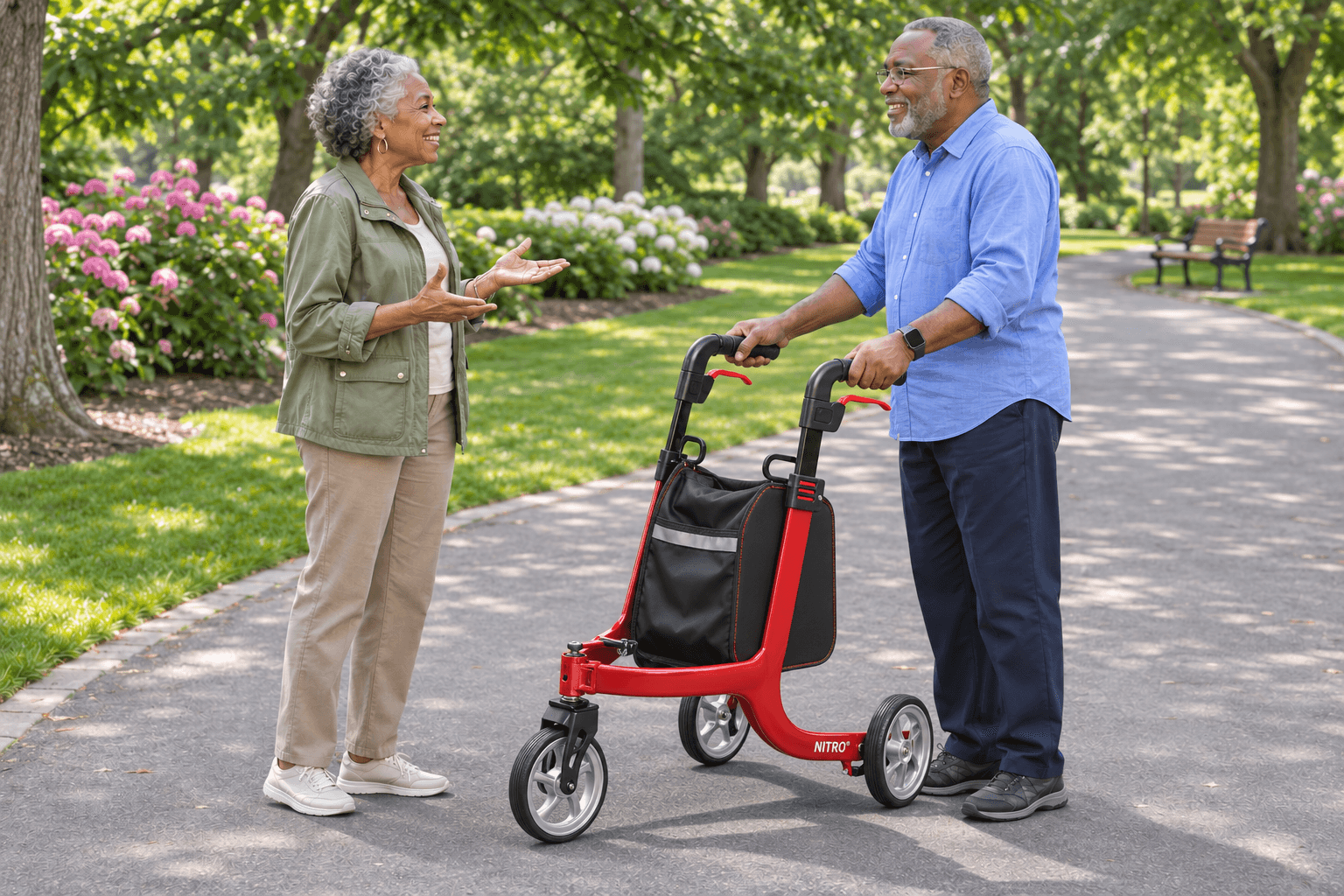
Table of Contents
- 3 Wheel Rollator Walkers: Pros, Cons, and What to Buy
- What Are 3 Wheel Rollator Walkers?
- Pros of 3 Wheel Rollator Walkers
- Cons of 3 Wheel Rollator Walkers
- 3 Wheel Rollators vs 4 Wheel Rollators: Side-by-Side Comparison
- Who Is a 3 Wheel Rollator Walker Best Suited For?
- Tips for Choosing the Right 3-Wheel Rollator
- Where to Buy 3 Wheel Rollator Walkers at the Best Price
- FAQs
3 Wheel Rollator Walkers: Pros, Cons, and What to Buy
Getting around your home shouldn’t mean struggling to turn a walker around furniture or squeezing through awkward spaces. 3-wheel rollator walkers and their easy-turning design can make everyday movement more manageable, while its folding frame makes storage and transport convenient.
But maneuverability is only part of the decision. The right walker also needs to match your balance, strength, and surroundings. This guide explains the advantages and limitations of three-wheel rollators, how they compare with four-wheel models, and what to check before buying.
What Are 3 Wheel Rollator Walkers?
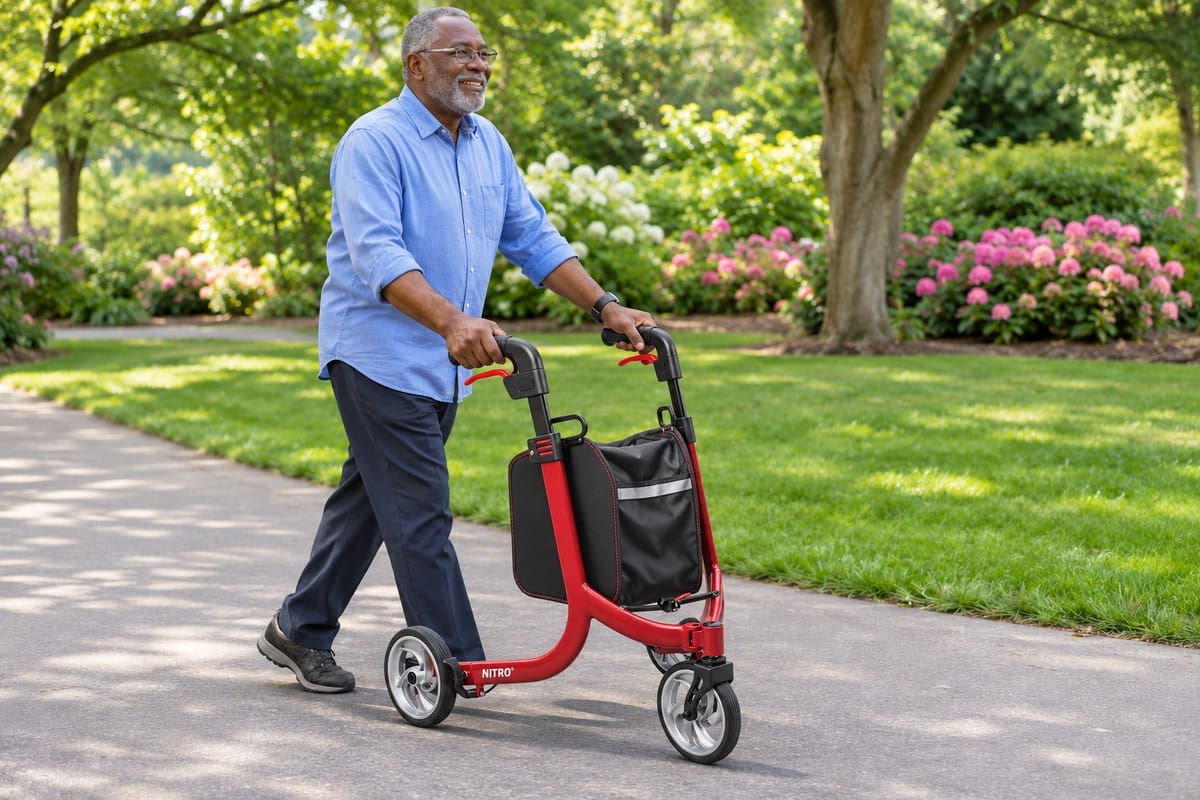
A three-wheel rollator is a walking aid with one front wheel and two rear wheels arranged in a triangular layout. It rolls along as you walk, providing balance support without requiring you to lift the frame with every step.
These walkers commonly have adjustable handles, hand brakes, a folding frame, and a storage pouch or basket. Their compact design can make them convenient for navigating around furniture and storing between outings.
However, a rollator is generally intended for someone who can support their own body weight while walking. If you need to take substantial weight off an injured or recovering leg, ask your physical therapist which type of walker is appropriate.
Key Features and Components Explained
- Frame: The frame connects the handles and wheels. Its overall width, weight, and folding mechanism affect how easily you can maneuver, store, and transport it.
- Three wheels: A steering front wheel helps the rollator change direction. Wheel size and material affect how it handles different surfaces.
- Hand brakes: Brake levers help control movement. Many models also have a parking-brake setting. Check that you can comfortably reach and operate both brakes.
- Adjustable handles: Height adjustments help position the grips for comfortable walking without excessive bending or reaching.
- Storage: A pouch, basket, or tray can carry small belongings while keeping your hands available for the handles. Accessories have their own weight limits.
- Seat availability: Do not assume a three-wheel rollator includes a seat. A storage pouch or tray is not a sitting surface.
How It Differs from a Traditional Walker
A standard walker has four rubber-tipped legs and must be lifted and repositioned before you step. A three-wheel rollator moves continuously on wheels and uses brakes to help control that movement.
That rolling action can make getting around easier for the right user. However, it does not provide the same stationary support as a standard walker. The choice should reflect how much support you need, along with your ability to steer and brake safely.
Pros of 3 Wheel Rollator Walkers
The main appeal of a three-wheel rollator is convenience: it can be easy to turn, fold, and take along. Those advantages matter most when the device also provides the level of support you need.
Easy Maneuverability in Tight Spaces
The triangular layout and steering front wheel can make changing direction easier around furniture and in smaller rooms. That can be useful when navigating a home where a larger walking aid feels cumbersome.
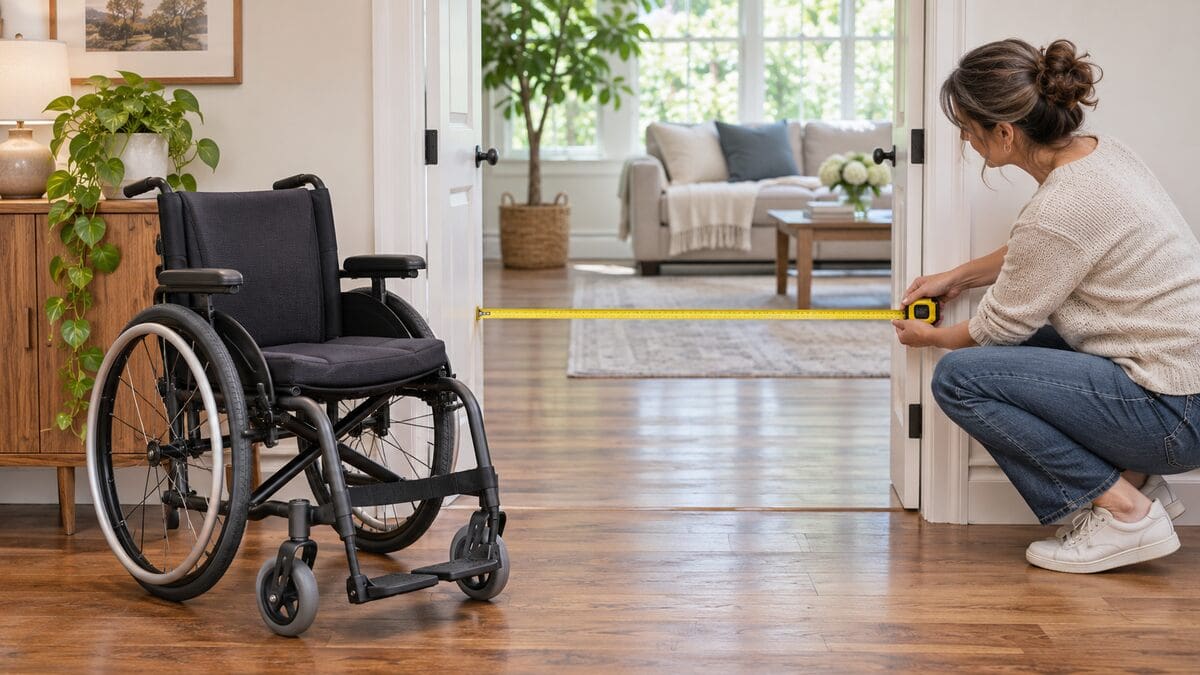
However, an easy-turning walker is not necessarily a narrow walker. Measure your doorways and compare them with the model’s overall width, including its wheels and handles.
Lightweight and Easy to Transport
Many three-wheel rollators have lightweight frames that fold for storage or car travel. For example, the Rally Lite 729 three-wheel walker is listed with a 10-pound aluminum frame.
Compare actual product weights rather than assuming every three-wheel model is lighter than every four-wheel model. Also check the folded dimensions and whether accessories must be removed before loading it into a vehicle.
Convenient Storage for Everyday Essentials
A storage pouch or basket gives you somewhere to put small belongings while keeping both hands on the handles. Some models also include a tray for carrying suitable items.
The Drive 10289 Deluxe three-wheel walker, for example, offers a basket and tray. Check the manufacturer’s instructions for accessory weight limits and safe loading.
Cons of 3 Wheel Rollator Walkers
A compact design involves tradeoffs. Before choosing a three-wheel model, consider whether you need a seat, a different level of balance support, or a higher weight capacity.
Stability Requires Careful Consideration
Three-wheel rollators generally offer less lateral stability than comparable four-wheel designs. Sharp turns, reaching to one side, or uneven ground can make maintaining balance more difficult.
If you have significant balance difficulties or a history of falls, ask a physical therapist to assess the device before purchasing. More wheels alone do not establish that a particular rollator is safe for your needs.
Fewer Options for Higher Weight Capacities
Weight limits vary by model. The three-wheel walkers listed in our category include models with capacities of 250, 275, and 300 pounds. Verify the exact product’s specifications before ordering.
If you need a higher capacity or more room between the handles, compare our heavy-duty walkers and rollators. Remember that a higher capacity does not mean a rollator is designed to support substantial leaning pressure while you walk.
A Seat Usually Is Not Included
If you tire easily and need regular sitting breaks, the absence of a seat may be the deciding factor. A three-wheel rollator can help you get around, but most will not provide somewhere to sit when you reach your destination.
For that feature, start with our four-wheel rollators with seats. Never sit on a basket, tray, pouch, or frame component that the manufacturer has not designated as a seat.
3 Wheel Rollators vs 4 Wheel Rollators: Side-by-Side Comparison
Think about where you walk, whether you need sitting breaks, and who will load the device into a car. Then compare individual models.
| Feature | 3-wheel rollator | 4-wheel rollator |
|---|---|---|
| Maneuverability | Often easy to turn around furniture and in smaller spaces | Varies with frame size and wheel design |
| Stability | Generally less lateral stability than comparable four-wheel models | Generally offers a broader support base |
| Seat | Usually not included | Commonly included |
| Weight and transport | Many lightweight, folding options | Lightweight and heavier-duty options; compare exact specifications |
| Storage | May include a pouch, basket, or tray | Often includes a bag or basket beneath the seat |
| Outdoor use | Depends on the model and manufacturer’s instructions | More outdoor-oriented options, but suitability remains model-specific |
Maneuverability, Stability, and Weight Compared
A three-wheel model may be appealing when turning and transport are your main concerns. A four-wheel model may better meet your needs when you want a seat or a broader support base.
Neither wheel count nor product weight tells the whole story. Compare overall dimensions, wheel design, brake operation, and your ability to control the device.
Best Use Cases for Each Type
Consider a three-wheel rollator when your clinician agrees it provides appropriate support, you want an easy-turning walking aid, and you have reliable places to sit when needed.
Consider a four-wheel rollator when sitting breaks are a priority or you need features offered by a particular four-wheel model. For outdoor walking, verify the intended surfaces and terrain restrictions before buying.
Who Is a 3 Wheel Rollator Walker Best Suited For?
A three-wheel rollator may suit someone who can support their own weight, operate the brakes reliably, and benefit from a compact walking aid for balance support.
Age alone does not determine whether it is appropriate. An active older adult and someone recovering from surgery may have very different support needs. After surgery, follow your care team’s recommendation rather than choosing primarily for convenience.
Tips for Choosing the Right 3-Wheel Rollator
- Confirm the support you need. Ask your clinician whether a three-wheel rollator is appropriate for your balance and walking abilities.
- Check handle-height adjustments. Make sure the adjustment range accommodates you comfortably.
- Verify weight capacity. Check both the user weight limit and separate accessory limits.
- Measure overall width. Allow room to pass through doorways and turn comfortably.
- Review wheel design and intended use. Confirm that the manufacturer permits use on your usual walking surfaces.
- Check brake operation. Make sure you can reach, squeeze, and lock the brakes as instructed.
- Compare folding mechanisms. Check how the frame opens, closes, and secures for use.
- Plan for rest breaks. If you need a built-in seat, compare seated four-wheel models before deciding.
- Review return terms. Confirm eligibility, potential fees, and warranty coverage before ordering.
Where to Buy 3 Wheel Rollator Walkers at the Best Price
At American Discount Home Medical Equipment, you can compare three-wheel walkers and rollators by weight, dimensions, capacity, and features. If a seat is essential, explore our four-wheel rollators with seats instead.
We offer a lowest-price guarantee and free ground shipping throughout the contiguous United States with no minimum order. Financing is available through Bread Pay, subject to approval and applicable terms.
Need help comparing models? Call 800-956-6616 or use our website’s live chat. We can help you compare product features with your clinician’s recommendation so you can shop with confidence.
FAQs
Is a three-wheel rollator better than a four-wheel rollator?
It depends on your needs. Three-wheel rollators can be easier to maneuver in smaller spaces, while four-wheel models generally provide a broader support base. Compare individual models and ask your physical therapist which design suits your balance and walking abilities.
Can you use a three-wheel rollator outside?
Some models are designed for both indoor and outdoor use, including the Drive Nitro three-wheel rollator. Check the manufacturer’s instructions for permitted surfaces. Larger wheels can help with small surface irregularities, but they do not make every path or terrain suitable.
Will a three-wheel rollator fit through narrow doorways?
Check the model’s overall width rather than assuming three wheels means a narrower frame. Measure your doorway’s clear opening with the door open and allow additional room to maneuver. Use the rollator fully opened and secured as instructed by the manufacturer.
How much weight can a three-wheel rollator support?
Capacity varies by model. The three-wheel models listed on our website include options rated for users weighing up to 250, 275, or 300 pounds. Always check the exact product’s specifications. Storage bags and baskets have separate weight limits.
Are three-wheel rollators easy to fold and transport?
Many fold compactly, but the folding mechanism and product weight vary. Before buying, compare folded dimensions with your vehicle’s storage space and confirm that you or your caregiver can lift the device comfortably.
Can I use a three-wheel rollator after surgery?
Only if your care team recommends it. A rollator generally supports balance rather than taking substantial weight off a recovering leg. Your surgeon’s weight-bearing instructions and your physical therapist’s assessment should guide your choice.
What makes the Drive Nitro three-wheel rollator different?
The Drive Nitro has a sculpted aluminum frame, internal brake cables, a large removable storage bag, and a side-to-side folding design that allows it to remain standing when folded. It weighs 12.7 pounds and has a 9-inch front wheel and 8-inch rear wheels. View the Drive Nitro three-wheel rollator.