Rollator vs Walker: Which Is Right for You?
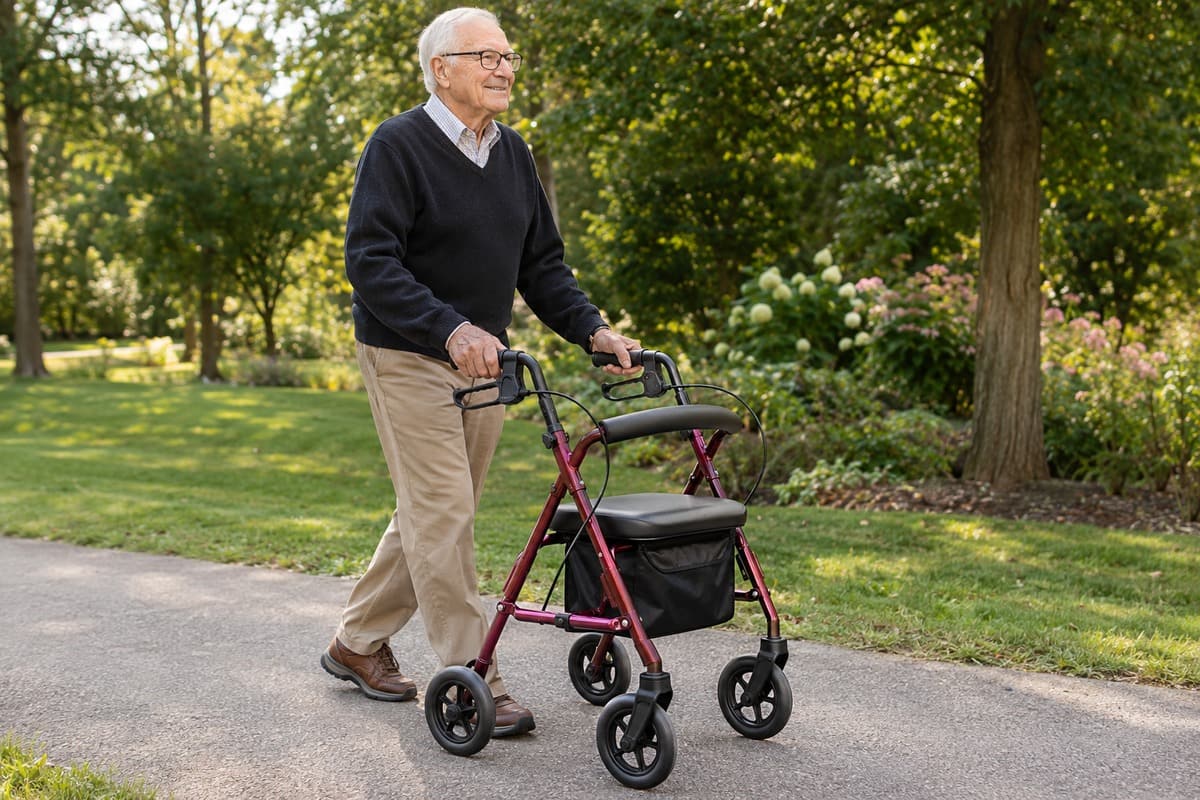
Table of Contents
- Rollator vs. Walker: Which Is Right for You?
- What Is a Walker?
- What Is a Rollator?
- Rollator vs Walker: Side-by-Side Comparison
- Who Should Use a Standard Walker?
- Who Should Use a Rollator Walker?
- Special Considerations: Bariatric, Travel, and Electric Options
- Tips for Buying a Rollator or Walker Online
- Shop Rollators and Walkers at the Lowest Prices
- FAQs
Rollator vs. Walker: Which Is Right for You?
You want to get around more comfortably, whether that means walking to the bathroom, shopping for groceries, or enjoying time outside. But should you choose a walker or a rollator?
The biggest difference is how much support you need. A standard walker provides a stationary frame you can lean on as you step. A 4-wheel walker, also known as a rollator, rolls along with you and is generally intended for balance and endurance rather than taking substantial weight off your legs.
The right choice also needs to fit your home, your strength, and your daily routine. Here’s how to compare a rollator vs a walker.
What Is a Walker?
A standard walker is a walking aid with four rubber-tipped legs and no wheels. You lift it a short distance forward, place all four legs on the floor, and then step into the frame.
Because it stays in place while you step, it offers more stability than wheeled models. It may be recommended when you need substantial support because of leg weakness, an injury, or recovery from surgery. You must also have enough strength and coordination to lift and position it safely.

Types of Standard Walkers
Although “standard walker” specifically means a model without wheels, the broader walker family includes several designs:
- Standard pickup walkers: Four rubber-tipped legs provide a stationary base for each step. You lift and reposition the frame as you move forward. We do not carry pickup walkers here at American Discount Home Medical Equipment.
- Two-wheel walkers: Front wheels let you advance the frame without lifting the entire walker. Rear tips or approved glides help control movement. These can suit people who need support but struggle to lift a pickup walker.
- Hemi walkers: These stand beside the body and are operated with one hand. They may be considered when someone has use of only one arm or hand.
- Platform walkers: Platform walker attachments add forearm supports to a compatible frame, offering an alternative for people who have difficulty gripping conventional handles. A clinician should help determine the appropriate setup.
What Is a Rollator?
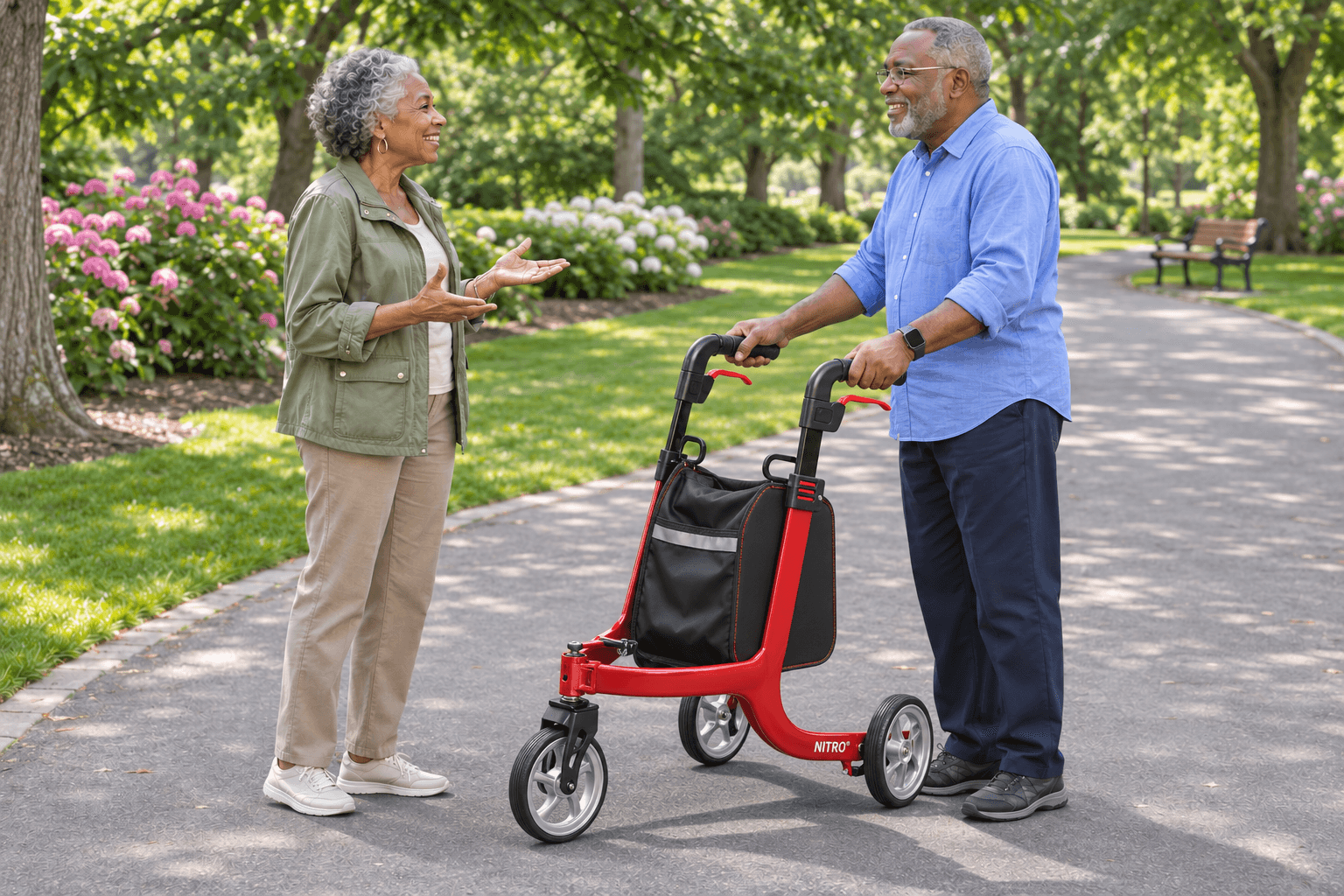
A rollator is a walking aid with wheels on every leg, allowing it to move continuously as you walk. Most have hand brakes and a storage bag or basket. Four-wheel models commonly include a seat for rest breaks.
That rolling design can make walking feel smoother, but it also requires control. A rollator can move away from you if you push too far ahead or cannot operate its brakes reliably. It generally suits someone who can support their own body weight while walking and needs help with balance or endurance.
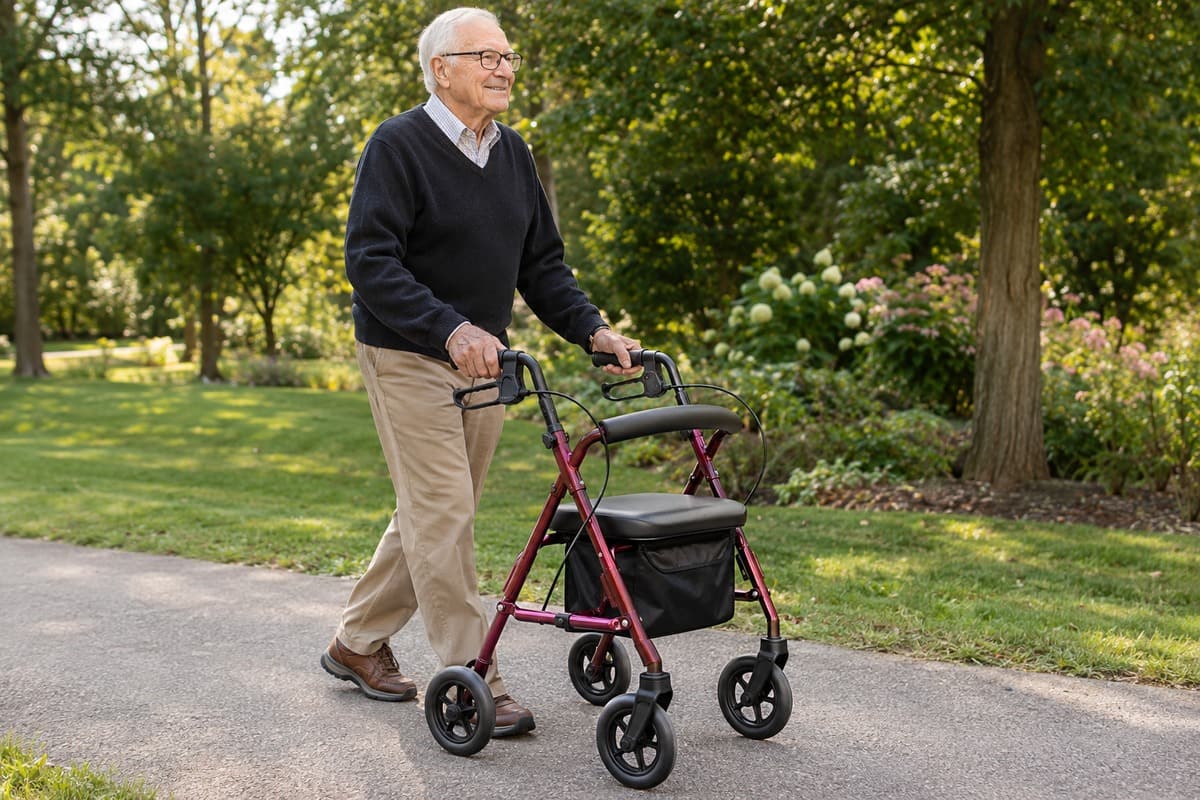
Types of Rollator Walkers
Three-wheel rollators offer easy maneuverability, which can be helpful in tight spaces. Most do not have a seat, so check the features carefully if resting during outings is a priority.
Four-wheel rollators typically combine walking support, hand brakes, storage, and a seat. They are worth considering when you want somewhere to rest during shopping trips or longer walks.
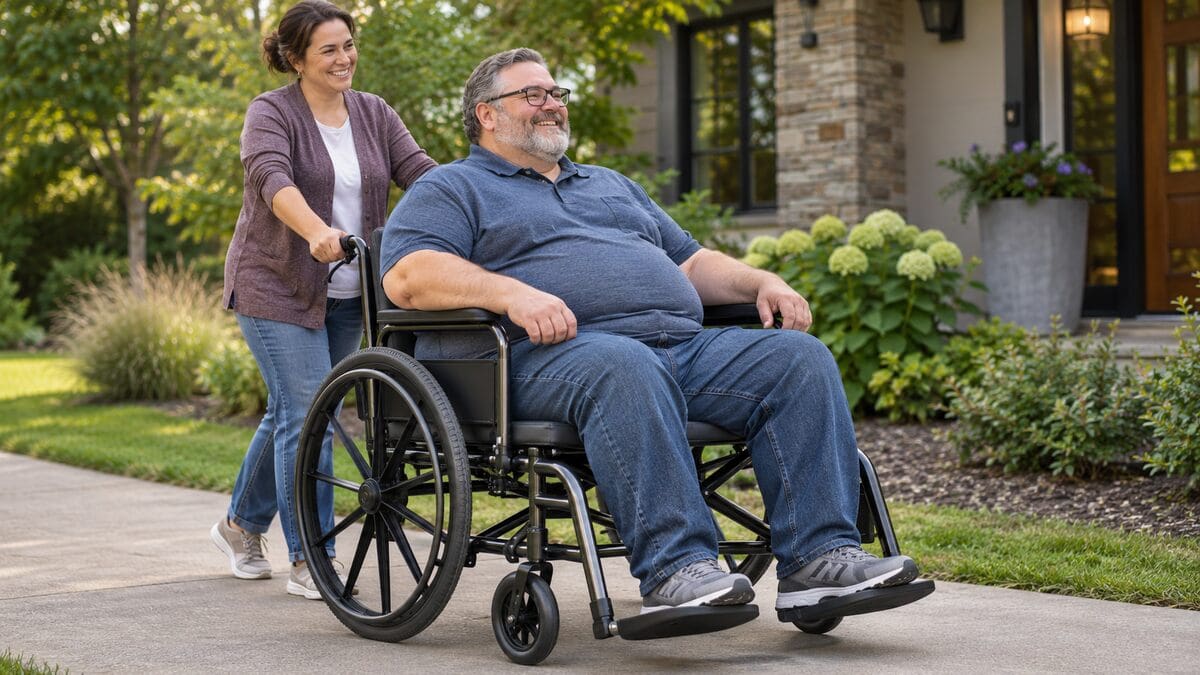
Heavy-duty walkers and rollators have reinforced frames and higher weight capacities. Many rollators in this category also offer wider seats. Always check the individual product’s capacity and dimensions to make sure it fits both you and your home.
Electric rollators and combination devices offer different functions depending on the model. Some convert between a rollator and a powered wheelchair. The word “electric” does not automatically mean the device provides powered assistance while you walk, so verify exactly what the model does before purchasing.
Rollator vs Walker: Side-by-Side Comparison
Start with the support your clinician recommends, then compare how each device would work in your daily life.
| Feature | Standard walker | Two-wheel walker | Rollator |
|---|---|---|---|
| Movement | Lift and place before stepping | Advance on front wheels | Rolls on three or four wheels |
| Main purpose | Greater stability and weight-bearing support | Support with less lifting | Balance support and help with limited endurance |
| Brakes | No hand brakes | Usually no hand brakes | Usually hand-operated brakes |
| Seat | Generally none | Generally none | Common on four-wheel models |
| Main consideration | Ability to lift and position it | Ability to control the frame | Ability to control movement and operate brakes |
The device’s design and the user’s abilities both matter; a higher weight rating alone does not establish that a device provides the right kind of support.
Stability and Weight Support
A standard walker generally offers the most stability because all four legs remain stationary while you step. A rollator is easier to keep moving, but that movement makes it less suitable for someone who needs to bear significant weight through the handles.
Weight capacity and weight-bearing support are different. A bariatric rollator may accommodate a heavier user, but its capacity rating does not turn it into a stationary walking frame.
Portability and Ease of Use
Many walkers and rollators fold for storage. However, “folding” does not tell you how easy a device will be to load into a car.
Before buying, compare its actual weight, folded dimensions, and folding mechanism. Consider who will lift it and whether that person can manage it comfortably. Lightweight rollators are available, including models designed to fold compactly for transportation.
Indoor vs Outdoor Performance
Think about the surfaces you encounter most often:
- Tile and other smooth floors: Compare turning space, traction, and your ability to control the device.
- Carpet: Ask whether the wheels, rear tips, or glides suit your carpet’s thickness.
- Pavement: Look for a model approved for outdoor use.
- Uneven surfaces: Larger wheels and suitable tires can improve rolling over bumps, but an outdoor design still needs to match your abilities.
Wheel material matters as well as diameter. Some outdoor rollators use larger, softer or pneumatic tires to absorb vibration and handle rougher surfaces.
Who Should Use a Standard Walker?
A standard walker may suit someone who needs substantial support while walking, has difficulty controlling a rolling device, or needs a stable frame during recovery. The ability to lift and reposition it safely is part of that decision.
If you are recovering from surgery, follow your surgeon’s weight-bearing instructions and your physical therapist’s recommendation. A two-wheel walker may be more appropriate than a pickup walker for some people, particularly when lifting the frame is difficult.
Who Should Use a Rollator Walker?
A rollator may suit someone who can walk without placing substantial body weight on the device but benefits from balance support. A seated model can also help someone whose endurance limits how far they can comfortably walk.
For example, you may feel comfortable walking around your home but want support and somewhere to rest during longer outings. Before choosing a rollator, make sure you can steer it, control its speed, and operate the brakes.
Special Considerations: Bariatric, Travel, and Electric Options
For bariatric users, check dimensions alongside capacity. Compare the space between the handles, usable seat width, and overall frame width. A wider device should fit both your body and the doorways you use. You can shop for heavy-duty bariatric walkers here or use the filter to sort out bariatric rollators here.
For frequent travel, plan around loading and storage. Measure your trunk or cargo space and compare those measurements with the folded device. Ask whether accessories need to be removed before folding.
For electric options, identify the function you need. Walking assistance, caregiver push assistance, and powered seated travel are different features. Check which operating modes the model actually offers, along with battery requirements and transport weight. Some combination models provide rollator, transport-chair, and electric-wheelchair functions in one device.
Tips for Buying a Rollator or Walker Online
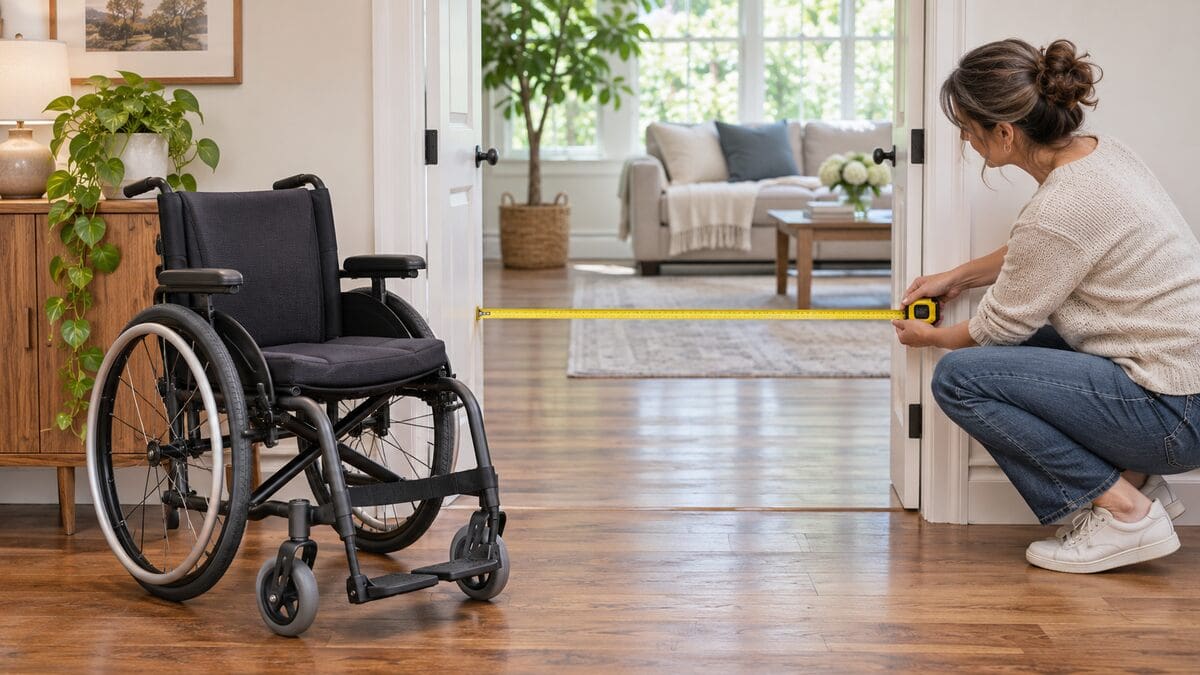
A product photo cannot tell you whether a walker will fit your body or pass through your bathroom doorway. Before ordering, verify these details:
- Recommended device type. Ask your physical therapist or other treating clinician whether you need a pickup walker, two-wheel walker, or rollator.
- Weight capacity. Confirm the exact model’s rating, including any separate storage limits.
- Handle-height range. Handles generally should line up with your wrist crease when you stand upright with your arms relaxed. Your elbows should bend slightly when holding them.
- Overall width. Measure narrow doorways and turning areas, then allow room to maneuver.
- Seat measurements. If you want a seat, check its height and usable width.
- Wheel design. Verify that the model suits your usual indoor or outdoor surfaces.
- Product weight and folded size. Check whether you or your caregiver can lift and store it.
- Brake operation. Ask how the brakes work, especially if hand strength or dexterity is limited.
- Return terms and warranty. Confirm return eligibility, possible fees, and warranty coverage before purchasing.
Shop Rollators and Walkers at the Lowest Prices
Finding the right walking aid starts with understanding what you need. At American Discount Home Medical Equipment, we can help you compare product specifications and find a model that matches your clinician’s recommendation, your space, and your budget.
Shop with our lowest-price guarantee, plus free ground shipping throughout the contiguous United States with no minimum order. Financing is available through Bread Pay, subject to approval and applicable terms.
Browse walkers and rollators, or call 800-956-6616 for help comparing your options.
FAQs
Is a rollator safer than a standard walker?
Neither is safer for everyone. A standard walker generally provides more stability for someone who needs substantial support. A rollator may suit someone who can support their own weight but needs help with balance or endurance. A physical therapist can help you choose based on your strength, balance, and walking pattern.
Can I use a rollator after knee or hip surgery?
It depends on your surgeon’s weight-bearing instructions and your physical therapist’s assessment. A rollator generally isn’t appropriate when you need to take significant weight off your operated leg. Follow your care team’s recommendation before switching devices.
Does a higher weight capacity mean a rollator provides more support?
No. Weight capacity tells you the maximum user weight the manufacturer allows. It does not mean you can safely lean heavily on the rollator while walking. Even a bariatric rollator can roll forward under pressure.
Is a three-wheel or four-wheel rollator better?
Three-wheel rollators can be easier to maneuver in tight spaces and are often more compact. Four-wheel models generally provide a broader base and commonly include a seat. Choose based on your balance needs, available space, and whether you need rest breaks.
How do I know what size walker or rollator to buy?
Check the handle-height range, weight capacity, and overall width. For a rollator with a seat, also compare seat height and usable seat width. Measure your narrowest doorways and confirm that the device leaves enough room to maneuver comfortably.
What should I check before buying a walker online?
Confirm the device type your clinician recommends, then review the exact model’s dimensions, weight, height adjustments, and capacity. For rollators, check brake operation and wheel suitability. Also verify return eligibility, fees, and warranty terms before ordering.
Can one walker work both inside and outside?
Some models can, but check the manufacturer’s intended use. Smooth indoor floors, thick carpet, and uneven pavement create different demands. Wheel size, tire material, frame width, and your ability to control the device all affect how well it will work.