CPAP Machine Side Effects: What You Need to Know
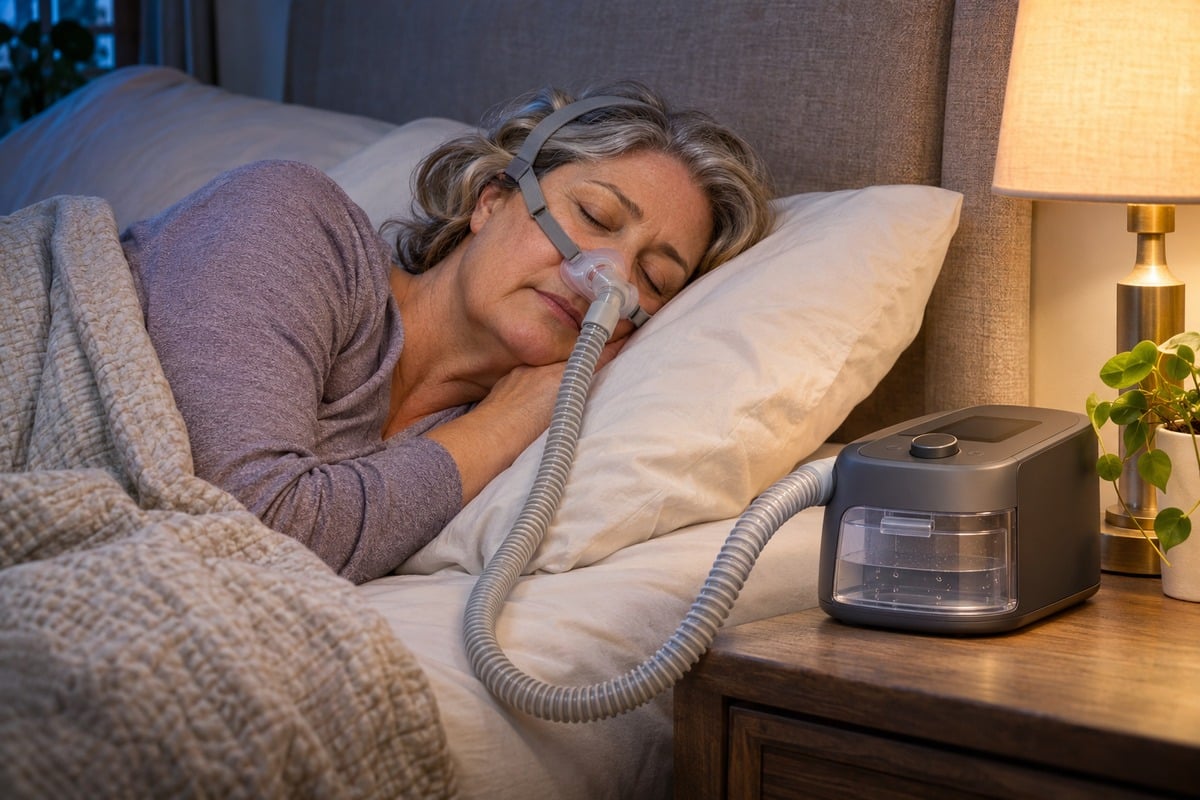
Table of Contents
- CPAP Machine Side Effects: What You Need to Know
- What Is CPAP Therapy?
- Common CPAP Machine Side Effects
- Are CPAP Machine Side Effects Dangerous?
- Long-Term Side Effects of CPAP Machine Use
- CPAP vs BiPAP: Is There a Better Alternative?
- How to Manage CPAP Side Effects
- When to See Your Doctor About CPAP Side Effects
CPAP Machine Side Effects: What You Need to Know
Your CPAP machine is supposed to help you sleep better. So waking up with a dry mouth, a sore nose, or an uncomfortable stomach can be frustrating—and leave you wondering whether treatment is working for you. Good news is most common CPAP machine side effects can be addressed with the right adjustments.
Mask fit, air leaks, humidity, and prescribed pressure all affect your comfort. The key is knowing what you can troubleshoot and when to contact your healthcare provider.
This guide explains common problems, what research says about longer-term effects, and how to get help without leaving your sleep apnea untreated.
What Is CPAP Therapy?
CPAP stands for continuous positive airway pressure. It is a common treatment for obstructive sleep apnea, a condition in which the upper airway repeatedly narrows or closes during sleep.
According to the National Heart, Lung, and Blood Institute, positive airway pressure machines are the most common treatment for sleep apnea. Different types include fixed-pressure CPAP, automatically adjusting PAP, and bilevel PAP.
How CPAP Machines Work to Treat Sleep Apnea
A CPAP machine draws in room air and delivers it through tubing to a mask or nasal interface. The prescribed pressure helps hold your upper airway open while you sleep. CPAP does not ordinarily supply supplemental oxygen unless oxygen has been separately prescribed and connected using an appropriate setup.
A typical system includes the machine, air filter, tubing, and interface. Many also have a heated humidifier to add moisture to the airflow.
What Conditions Is CPAP Used For?
The reason for prescribing CPAP matters because different breathing disorders require different treatment approaches:
- Obstructive sleep apnea: CPAP helps prevent upper-airway collapse during sleep.
- Selected cases of central sleep apnea: A sleep specialist may recommend CPAP, but treatment depends on the cause and response. Central apnea involves problems with breathing signals, rather than simply a blocked airway.
- COPD with coexisting obstructive sleep apnea: CPAP may treat the sleep apnea. COPD with persistently elevated carbon dioxide may require a different form of noninvasive ventilation.
- Certain acute breathing emergencies: Clinicians may use CPAP in monitored settings, such as respiratory failure caused by cardiogenic pulmonary edema. A home sleep-apnea machine is not a substitute for emergency care.
These distinctions are reflected in guidelines from the American Academy of Sleep Medicine and the American Thoracic Society, along with joint ERS/ATS guidance on acute respiratory failure.
Common CPAP Machine Side Effects
Dryness, nasal symptoms, mask irritation, and difficulty adjusting to the equipment are recognized CPAP problems. They can occur when you first begin treatment or develop later as cushions wear out, your needs change, or leaks appear.
One useful finding comes from an American Academy of Sleep Medicine systematic review: heated humidification reduced several nasal and mouth-related side effects, although it did not consistently improve how long people used treatment.
Dry Mouth and Throat Dryness
Air leaking through an open mouth—particularly with a nasal interface—can contribute to dryness. Insufficient humidification and mask leaks can also play a role.
Start by asking your supplier to check the fit and reviewing your humidifier settings. If your mouth opens during sleep, discuss whether another interface would work better. Mayo Clinic’s CPAP troubleshooting guide describes these approaches and other options for persistent dry mouth.
Nasal Congestion and Runny Nose
Airflow and dryness can irritate nasal passages, leading to stuffiness, drainage, or minor nosebleeds. Allergies and other nasal conditions can contribute as well.
Heated humidification and saline nasal spray may help. If your clinician recommends a nasal rinse, follow its instructions and use distilled, sterile, or previously boiled and cooled water. Persistent symptoms deserve evaluation rather than repeated increases in humidity.
Skin Irritation and Mask Pressure Marks
An overtightened or poorly fitting mask can leave redness and sore spots. Tightening the straps further may worsen the problem.
Ask for a fitting check, inspect the cushion for wear, and discuss a compatible liner or different interface. Open sores, worsening pain, or signs of infection need medical attention.
Bloating, Gas, and Aerophagia
Aerophagia means swallowing air. During PAP treatment, it can cause belching, gas, bloating, or abdominal discomfort.
Your clinician may review pressure, leaks, and treatment mode. In a randomized crossover trial, automatically adjusting PAP reduced aerophagia symptoms compared with fixed-pressure CPAP in affected patients. That does not mean switching modes is appropriate for everyone.
Do not lower your prescribed pressure yourself. The National Heart, Lung, and Blood Institute advises stopping PAP use and calling your provider right away if you develop stomach discomfort or bloating. Severe abdominal pain or vomiting warrants urgent assessment.
Claustrophobia and Mask Discomfort
Feeling enclosed by a mask can make relaxing difficult. A gradual approach may help: practice holding the interface against your face while awake, then progress to wearing it with the machine running as your care team recommends.
Relaxation exercises and a less enclosing interface may also help. Tell your provider if anxiety or disrupted sleep continues; struggling through night after night is a reason to seek support.
Are CPAP Machine Side Effects Dangerous?
Most familiar CPAP problems involve discomfort rather than a medical emergency. However, new chest pain, significant breathing difficulty, or severe abdominal symptoms should not be dismissed as normal adjustment.
Untreated sleep apnea also has consequences. The goal is to address problems promptly while maintaining an effective treatment plan—not to choose between discomfort and no treatment.
CPAP Machine Side Effects on the Heart
CPAP is not generally considered harmful to the heart when appropriately prescribed. Treating obstructive sleep apnea reduces repeated airway obstruction and may help lower blood pressure.
However, it would be misleading to promise that CPAP prevents heart attacks or strokes. In the SAVE randomized trial, CPAP improved sleepiness and quality of life but did not prevent major cardiovascular events in the studied population. Average use was 3.3 hours per night, which is relevant when interpreting the results.
If you have heart failure or central apnea, your specialist should select the appropriate treatment mode. CPAP, bilevel PAP, and adaptive servo-ventilation are not interchangeable.
CPAP Side Effects on the Lungs
Serious pressure-related lung complications are uncommon during treatment for sleep apnea. Rare reports describe pneumothorax, or a collapsed lung, including in people with underlying lung disease.
A published case report and literature review illustrates this possibility. A case report identifies a potential complication; it does not establish that it is common.
Sudden chest pain or new, significant shortness of breath requires emergency assessment. People with emphysema, a previous pneumothorax, or other substantial lung disease should ensure their prescribing clinician knows that history.
Can a CPAP Machine Kill You?
CPAP is an established treatment, and death is not an expected outcome of correctly prescribed and functioning therapy. Still, no medical device is entirely risk-free.
Device-specific safety problems are separate from ordinary treatment discomfort. For example, the FDA has documented recalls of certain Philips devices because sound-abatement foam could break down and expose users to particles or chemicals.
If your device is affected by a recall, follow the current instructions for that exact model and discuss the benefits and risks of continued use with your clinician. Do not assume every CPAP machine has the same problem.
Long-Term Side Effects of CPAP Machine Use
Long-term treatment can mean ongoing equipment care and occasional adjustments for leaks, dryness, or changing fit. These problems deserve attention even if you have used CPAP for years.
Research also documents meaningful benefits. The AASM evidence review supports improvements in sleepiness, sleep-related quality of life, and blood pressure with PAP treatment. Benefits and comfort depend partly on effective treatment and consistent use.
Body Changes After CPAP Therapy
You may notice less daytime sleepiness, reduced snoring, or better sleep quality. Improvements vary, and persistent fatigue should prompt a review of treatment effectiveness and other possible causes.
CPAP is not a weight-loss treatment. In the APPLES randomized trial, participants receiving CPAP gained a modest amount of weight on average. However, a longer-term analysis from SAVE found no clinically significant overall weight change attributable to treatment.
Neither weight gain nor weight loss is inevitable. Significant changes in your weight should be discussed with your provider because your treatment needs may change.
Why Some People Say “CPAP Ruined My Life”
A mask that wakes you repeatedly, disrupts intimacy, or makes travel feel complicated can turn treatment into a source of stress. Those experiences should be taken seriously.
Before concluding that PAP cannot work for you, ask for a structured review of mask fit, leaks, humidity, pressure tolerance, and remaining breathing events. If treatment remains intolerable, your sleep specialist can discuss alternatives appropriate to your diagnosis.
CPAP vs BiPAP: Is There a Better Alternative?
Bilevel PAP, often called BiPAP, delivers a higher pressure when you inhale and a lower pressure when you exhale. It can be useful for particular breathing disorders or pressure-tolerance problems, but it is not automatically a better treatment for uncomplicated obstructive sleep apnea.
Key Differences Between CPAP and BiPAP Machines
| Feature | CPAP | Bilevel PAP |
|---|---|---|
| Pressure delivery | One prescribed continuous pressure; some devices offer limited exhalation relief | Separate inhalation and exhalation pressures |
| Typical role | Common treatment for obstructive sleep apnea | Selected pressure-intolerance cases and conditions requiring additional breathing support |
| Comfort | Depends on fit, settings, and individual tolerance | Lower exhalation pressure may help some users |
| Cost and complexity | Generally simpler and less expensive | Generally more expensive, with capabilities varying by mode |
| Prescription | Requires clinician-selected settings | Requires clinician selection of the appropriate device, mode, and settings |
Who Should Consider Switching to BiPAP?
Discuss bilevel treatment if you cannot tolerate prescribed pressure despite troubleshooting, or if your clinician identifies a need for ventilatory support, such as selected cases of COPD with chronic carbon dioxide retention.
Central sleep apnea requires particular care. The 2025 AASM guideline recommends against bilevel PAP without a backup rate for several forms of central apnea. Simply buying a standard bilevel machine is not an appropriate solution.
How to Manage CPAP Side Effects
Start with the problem that bothers you most and involve the right person: your equipment supplier can help with fit and replacement parts, while your prescribing clinician should assess treatment effectiveness and pressure-related concerns.
Tips for Mask Fit, Humidity, and Pressure Settings
- Check fit in your sleeping position. Ask your supplier to show you how to assess the seal with airflow running.
- Avoid overtightening. Persistent leaks may require a different size, cushion, or interface.
- Review humidity. Follow the device instructions for comfort settings. Too much humidity can create condensation in the tubing.
- Ask about comfort features. Ramp or exhalation-relief features may help some users, but your clinician should confirm appropriate settings.
- Keep prescribed pressure changes with your care team. Comfort should improve without allowing apnea to go untreated.
- Follow cleaning instructions. Use the manufacturer’s recommended cleaning method rather than assuming an add-on sanitizer replaces it.
The American Thoracic Society provides practical troubleshooting tips. The FDA also explains concerns about CPAP-cleaning products, including ozone exposure and possible equipment damage.
Are There CPAP Machines Without a Mask?
Conventional CPAP needs an interface that seals at the nose, mouth, or both so it can deliver the prescribed pressure. Nasal pillows and under-the-nose cushions can cover less of your face, but they are still interfaces—not truly maskless CPAP.
If you cannot tolerate PAP, ask your sleep specialist about other treatments. Depending on your diagnosis and eligibility, these may include a professionally fitted oral appliance, positional therapy, weight management, surgery, or hypoglossal nerve stimulation. These are alternatives to CPAP, not interchangeable maskless versions of it.
When to See Your Doctor About CPAP Side Effects
Seek emergency care for sudden chest pain, severe or new breathing difficulty, fainting, blue or gray lips, or severe abdominal pain. Remove the interface if it is interfering with breathing and call 911 for a medical emergency.
Contact your prescribing provider promptly for:
- Stomach discomfort or bloating associated with PAP use.
- Persistent nosebleeds, skin sores, or significant irritation.
- New breathing symptoms or difficulty tolerating pressure.
- Ongoing sleepiness, disrupted sleep, or breathing events despite regular use.
- Anxiety or discomfort that prevents you from using treatment.
- Concerns about device damage, unusual odors, debris, or a recall.
You do not need to wait for your next routine appointment if treatment is keeping you awake or making you feel worse. A focused review can help identify whether you need a fitting adjustment, replacement supplies, revised settings, or a different treatment plan.