Best Bedside Commode Chairs for 2027: Five Picks for Different Needs
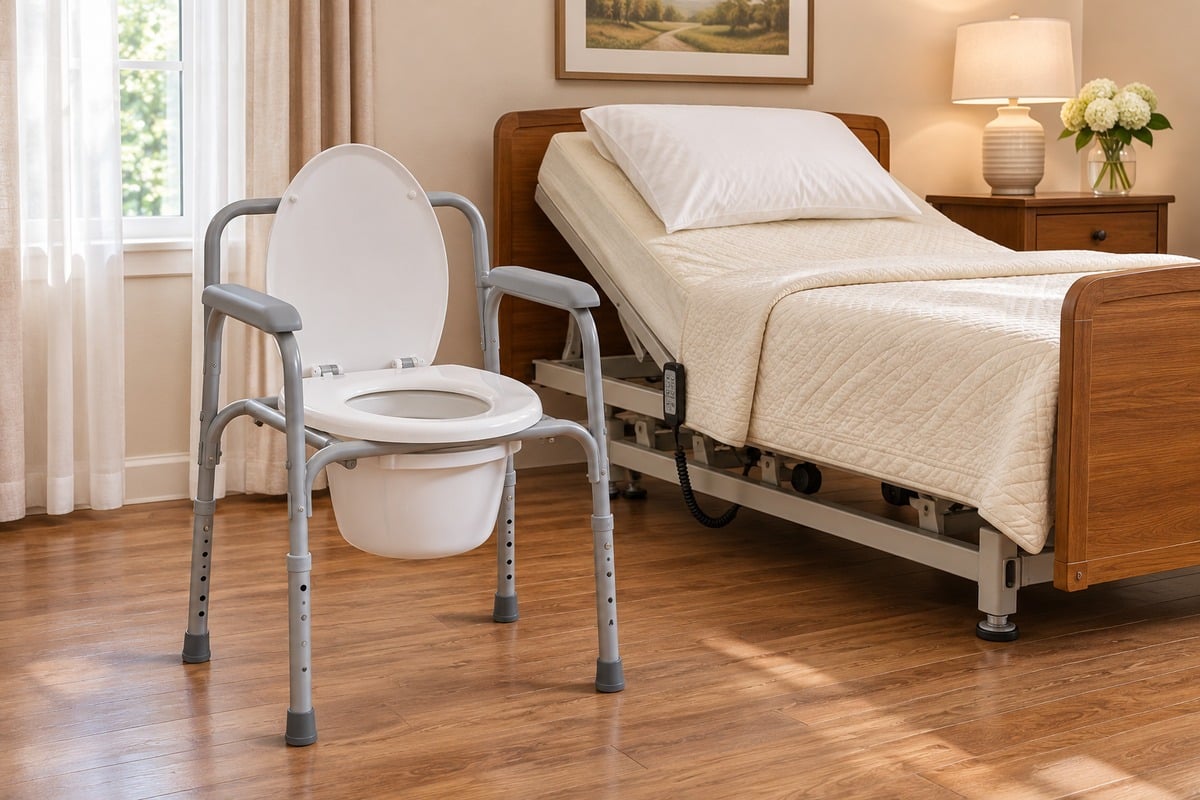
Table of Contents
- What Is a Bedside Commode Chair?
- Key Features to Evaluate Before You Buy
- 5 Best Bedside Commode Options for Seniors in 2027
- Bedside Commode Safety Tips for Caregivers
- Where to Buy a Bedside Commode: Online vs. Local Store
- Frequently Asked Questions About Commode Chairs
- Can a bedside commode be used over a regular toilet?
- How do I choose the right commode size?
- Does Medicare cover bedside commodes?
- How should I clean a bedside commode?
- Can a bedside commode also be used in the shower?
- Is a padded commode always better?
- Can I move someone while they are sitting on a commode?
- Which bedside commode should I choose?
When getting to the bathroom becomes difficult, a bedside commode can make daily care more manageable. But choosing one involves more than finding a chair with a bucket. The seat must fit the person, the frame must fit the room, and the design must support the way they transfer.
Our picks below cover five common needs: a straightforward everyday commode, extra capacity, easier side transfers, portability, and over-the-toilet versatility. Each is available from American Discount Home Medical Equipment.
What Is a Bedside Commode Chair?
A bedside commode is a freestanding toileting chair with an opening in the seat and a removable collection bucket underneath. It provides a toileting option near the bed or elsewhere in the home when reaching the bathroom is difficult.
Depending on the model, it may have adjustable legs, supportive armrests, a folding frame, or arms that lower for transfers. Some also work over an existing toilet.
How a Commode Chair Differs from a Raised Toilet Seat or Over-the-Toilet Chair
The main difference is where and how each product works:
- Bedside commode: Collects waste in a removable bucket and can be used away from the bathroom.
- Raised toilet seat: Attaches to or sits on a compatible toilet to increase sitting height. It does not provide a separate bedside toileting option.
- Over-the-toilet chair or frame: Stands around an existing toilet to provide arm support and, depending on the design, a higher seat.
- 3-in-1 commode: Converts between bedside commode, raised toilet seat, and toilet safety-frame configurations according to the manufacturer’s instructions.
Not every commode fits over every toilet. Check the clearance beneath the seat and between the legs before buying.
Who Benefits Most from a Bedside Commode?
A commode may help someone who has difficulty reaching the bathroom because of limited mobility, fatigue, recovery from surgery, or an inaccessible bathroom layout.
It can also shorten nighttime trips. However, placing a commode nearby does not automatically make independent toileting safe. Someone who needs assistance standing, balancing, or transferring may still need caregiver help and an assessment by an occupational or physical therapist.
Key Features to Evaluate Before You Buy
Start with three questions: Does it fit the person? Does it fit the space? Does it accommodate the transfer method? Then compare comfort and convenience features.
Seat Height Adjustability and Floor Clearance
A suitable seat height should allow comfortable positioning and follow any instructions from the user’s therapist or surgical team. For many users, supporting both feet on the floor is an important part of a stable seated position.
There is no single ideal adjustment range. The standard and folding models below adjust from approximately 16–23 inches, while the padded drop-arm option starts above 20 inches. A higher starting height may be unsuitable for a shorter person.
For over-the-toilet use, measure the toilet and compare it with the commode’s under-seat height and width. Seat height alone does not tell you whether the frame will clear the toilet.
Weight Capacity: Standard vs. Bariatric Ratings
Always use the manufacturer’s stated capacity for the exact model. The standard picks in this guide support up to 350 pounds, while our bariatric pick is rated for up to 1,000 pounds.
Capacity is only one measurement. Also compare usable seat dimensions, the seat opening, and the space between the arms. A chair can meet the weight requirement and still fit poorly.
Armrest Style and Transfer Accessibility
Fixed arms provide hand supports but remain beside the seat during transfers. Drop arms lower out of the way to provide side access from a bed or wheelchair.
A drop-arm design can accommodate a prescribed lateral transfer, but it does not eliminate the need for training or assistance. Have a therapist confirm the transfer setup, including the relative heights of the surfaces.
Seat Comfort and Padded Options
Standard molded seats are straightforward to wipe clean. Padded seats may feel more comfortable for some users, particularly when a firm surface causes discomfort.
Padding does not make a commode appropriate for prolonged sitting or guarantee pressure-injury prevention. If the user has fragile skin, reduced sensation, or an existing pressure injury, seek advice about suitable seating and time spent on the commode.
Portability and Folding Design
A folding frame can help when storing the chair between uses or transporting it to another home. Compare the actual product weight and folded measurements with what the caregiver can lift and the vehicle can accommodate.
Folding does not mean suitable for every environment. Travel use still requires a firm, level surface and a safe transfer setup.
Ease of Cleaning and Bucket Removal
Check how the bucket comes out and whether you will have enough room to remove it in the intended location. Some lift out beneath the seat; others slide out from the front.
Useful features include a bucket handle and lid, removable components, and surfaces accessible for cleaning. A splash guard is commonly used to direct waste into the toilet when a compatible commode is configured over it.
5 Best Bedside Commode Options for Seniors in 2027
We selected these models by comparing their listed capacity, dimensions, transfer features, portability, and included accessories. These are recommendations for specific needs based on published specifications, rather than hands-on test rankings.
| Best for | Model | Capacity | Seat height | Space between arms |
|---|---|---|---|---|
| Standard everyday use | Drive 11148-1 | 350 lbs. | 16.5–22.5 inches | 18 inches |
| Bariatric use | Rhythm Healthcare B3650 | 1,000 lbs. | 18.5–22.5 inches | 25.5 inches |
| Padded drop-arm design | Medline G1-301DPX1 | 300 lbs. | 20.25–24.25 inches | 20 inches |
| Portable folding design | Drive RTL11158KDR | 350 lbs. | 17–23 inches | Approximately 18 inches |
| 3-in-1 versatility | Medline G1-200LX1 | 350 lbs. | 16–22 inches | 18 inches |
Specifications reflect ADHME’s product listings at the time of writing. Confirm current details and configuration requirements before ordering.
Best Standard Bedside Commode Chair: Drive 11148-1
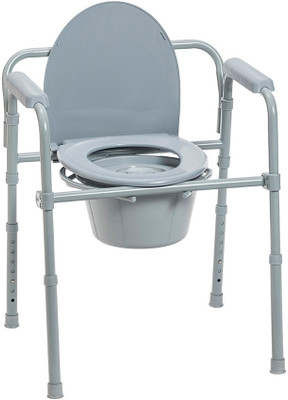
The Drive Steel Folding Commode Chair 11148-1 is our standard pick for someone who needs a straightforward adjustable commode without drop arms or padding.
- Weight capacity: 350 pounds.
- Seat height: 16.5–22.5 inches.
- Width between arms: 18 inches.
- Product weight: 14.8 pounds.
- Included: 7.5-quart bucket, lid, and splash shield.
Why we picked it: It combines height adjustment, a folding steel frame, and removable back support for compatible over-the-toilet use.
Check before buying: The seat opening measures 8 by 8.25 inches. Compare that with the user’s needs, and choose a different design if side access is required.
Best Bariatric Commode for Heavy-Duty Use: Rhythm Healthcare B3650
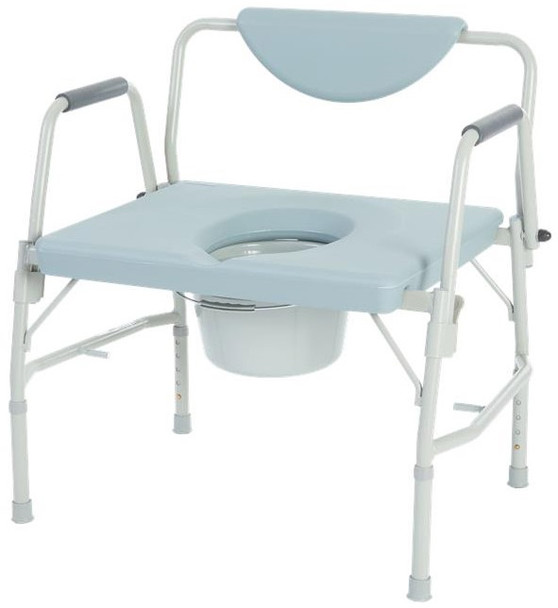
The Rhythm Healthcare B3650 Deluxe Bariatric Drop Arm Commode provides a higher capacity and more space than the standard models in this guide.
- Weight capacity: 1,000 pounds.
- Seat dimensions: 23 inches wide by 18.5 inches deep.
- Width between arms: 25.5 inches.
- Seat height: 18.5–22.5 inches.
- Base dimensions: 30.5 inches wide by 21.5 inches deep.
Why we picked it: The wide seat and drop arms accommodate needs that a standard narrow frame may not meet.
Check before buying: Measure the room carefully. Its wider footprint needs space for placement and caregiver access. The bucket slides out from the front, so that area must remain accessible.
Best Drop-Arm Commode for Transfer Access: Medline G1-301DPX1
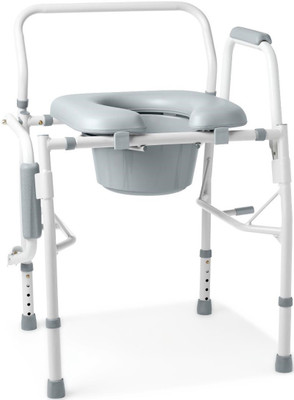
The Medline G1-301DPX1 Padded Drop-Arm Commode combines side access with a padded, open-front seat.
- Weight capacity: 300 pounds.
- Width between arms: 20 inches.
- Seat height: 20.25–24.25 inches.
- Seat dimensions: 16 by 16 inches.
- Product weight: 20 pounds.
Why we picked it: The drop arms provide lateral access, while the open-front seat allows access for personal care. Padding may improve comfort for users who dislike a molded seat.
Check before buying: Its lowest seat setting is relatively high. Confirm that it supports the user’s positioning and transfer plan. For over-the-toilet use, check the listed under-seat clearance.
Best Portable Potty Chair for Adults: Drive RTL11158KDR
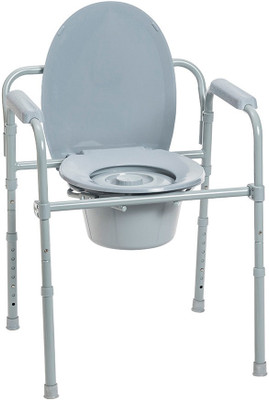
The Drive RTL11158KDR Folding Steel Commode is our portable pick for caregivers who need a chair they can fold and move between locations.
- Product weight: 13 pounds.
- Weight capacity: 350 pounds.
- Seat height: 17–23 inches.
- Width between arms: Approximately 18 inches.
- Included: Bucket with handle, cover, and splash shield.
Why we picked it: Its folding frame and tool-free assembly make it practical for transport and storage.
Check before buying: Confirm folded dimensions with our team if storage space is tight. Set it up fully before use, and do not use uneven ground as a substitute for a suitable indoor setup.
Best 3-in-1 Commode That Works Over the Toilet: Medline G1-200LX1
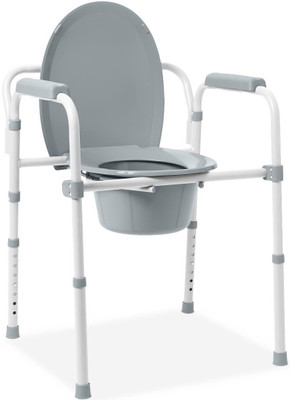
The Medline G1-200LX1 Folding 3-in-1 Commode offers bedside, raised-seat, and toilet safety-frame configurations.
- Weight capacity: 350 pounds.
- Seat height: 16–22 inches.
- Width between arms: 18 inches.
- Product weight: 14 pounds.
- Included: Pail, lid, and splash guard.
Why we picked it: Its removable backrest and folding frame provide flexibility as needs change. The clip-on seat can be removed for cleaning.
Check before buying: Listed under-seat clearance is 14–20 inches high and 18.75 inches wide. Compare these measurements with your toilet and follow the instructions for each configuration.
Bedside Commode Safety Tips for Caregivers
The right chair is only part of the setup. Positioning, assembly, and a suitable transfer plan matter just as much.
Positioning and Placement in the Bedroom or Bathroom
- Use a firm, level surface with all feet making stable contact.
- Check that height-adjustment buttons or clips are fully engaged and the legs are adjusted evenly.
- Allow enough space for the user’s mobility aid and any caregiver assistance.
- Keep the route clear of loose rugs, cords, and clutter.
- Provide accessible nighttime lighting.
- Follow the manufacturer’s placement instructions and the therapist’s recommendations.
Occupational therapy guidance from Kingston and Richmond NHS Foundation Trust emphasizes checking the frame, leg clips, rubber feet, and height adjustment before use.
How to Help a Senior Use a Commode Chair Safely
Have an occupational or physical therapist demonstrate the appropriate transfer before assisting someone who needs physical support. A standing transfer, lateral transfer, and lift-assisted transfer require different techniques.
Before each use, check that the chair is fully assembled, the bucket is correctly positioned, and any required arm or wheel locks are engaged. Explain the next step and allow time for the person to move.
Do not pull someone up by their arms or attempt to manually lift someone whose needs exceed your training. If they cannot transfer using the agreed method, ask the care team for reassessment rather than improvising.
Where to Buy a Bedside Commode: Online vs. Local Store
A local store may let you inspect a chair and take it home immediately. That can be useful when equipment is needed urgently or you want to see its dimensions in person.
Online shopping lets you compare more designs and review detailed specifications without transporting the user to multiple stores. The best value comes from selecting a model that fits correctly the first time.
Why Buying Online Offers Better Value and Selection
At ADHME, you can compare commode chairs, drop-arm models, bariatric commodes, and folding options in one place.
A product expert with more than 25 years of experience is available through live chat during business hours to help compare measurements and features. You can also call 800-956-6616.
And just as you can in Amazon, we offer free shipping here.
Frequently Asked Questions About Commode Chairs
Can a bedside commode be used over a regular toilet?
Some can, but not all. Choose a model explicitly approved for over-the-toilet use and check under-seat clearance, frame width, and the required configuration. Remove the bucket and fit any supplied splash guard as instructed.
How do I choose the right commode size?
Compare weight capacity, seat height, seat dimensions, opening dimensions, and width between the arms. Also measure the placement area and allow room for transfers. For over-the-toilet use, measure the toilet separately.
Does Medicare cover bedside commodes?
Medicare Part B may cover a medically necessary commode ordered for home use, subject to coverage requirements. After the deductible, eligible beneficiaries generally pay 20% of the approved amount when the supplier accepts assignment. See Medicare’s commode coverage information.
ADHME does not bill Medicare or insurance directly. Ask about available invoice documentation when purchasing here.
Confirm eligibility and supplier requirements with your insurer before purchasing; reimbursement is not guaranteed.
How should I clean a bedside commode?
Empty the bucket promptly and clean the bucket, seat, arms, and other affected surfaces according to the manufacturer’s instructions. Use compatible cleaning products, follow any disinfectant contact time, and wash your hands afterward. Never mix cleaning chemicals.
Can a bedside commode also be used in the shower?
Only if the manufacturer specifically approves it for shower use. A folding steel bedside commode is not automatically a shower chair. Choose equipment rated for every use you intend.
Is a padded commode always better?
No. Padding may improve comfort, but fit, seat height, cleaning requirements, and skin needs also matter. It does not replace a pressure-care assessment for someone at risk of skin damage.
Can I move someone while they are sitting on a commode?
Do not move an occupied stationary commode. For a wheeled model, follow its instructions: wheels alone do not establish that it is approved to transport a seated person.
Which bedside commode should I choose?
Start with the user’s transfer method and measurements. The Drive 11148-1 is our straightforward standard pick; the Rhythm B3650 provides greater capacity and width; the padded Medline G1-301DPX1 offers drop-arm access; the Drive RTL11158KDR prioritizes portability; and the Medline G1-200LX1 provides 3-in-1 versatility.
Need help narrowing it down? Shop bedside commodes or contact our team before ordering. We can help you compare the details that matter for your home.
Convert to PDF